
Your first suspect: detergent. If you’re using a generic brand that looks like it was made in a shed, switch to a quality powder or gel with citric acid or chelating agents—fancy words for “minute jailers.” These bind to the calcium and magnesium and flush them down the drain like tiny prisoners. Pro tip: Don’t use that “all-in-one” tablet if your water is harder than a math test; it’s like trying to fight a bear with a feather duster.
Second suspect: your rinse aid compartment is empty. Rinse aid is not a myth—it’s liquid wizardry. It contains surfactants that make water “wetter,” so it slides off dishes instead of beading up and leaving mineral spots. If your rinse aid is dry, your glasses are crying. Fill it up and watch the evil film retreat like a vampire in a Walmart.
The Hack That Will Make You Look Like a Dishwasher Whisperer
Here’s the surprise twist: revenge of the dishwasher salt. You know how some dishwashers have a weird cap at the bottom labeled “salt”? That’s not a secret snack compartment; it’s a hard-water killer. This is not table salt—it’s pure sodium chloride, which recharges the machine’s built-in water softener. If your machine has this feature, fill it up. If not, you can buy a whole-house water softener. Yes, it costs money, but your crystal stemware will thank you by not looking like a freezer-burned Iceland.
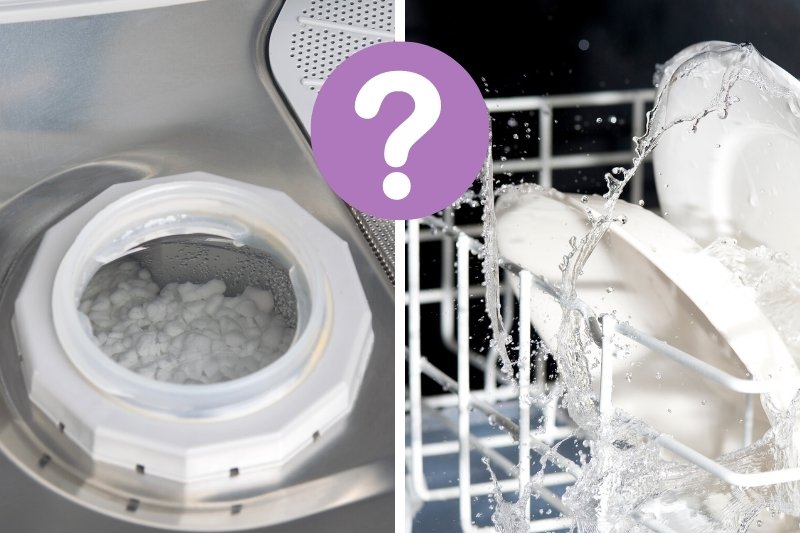 Why Is My Dishwasher Leaving a White Chalky Residue on Everything?
Also, check your spray arms. If they’re clogged with lime scale (that white stuff), they spray like a ninja with a squirt gun. Stick a toothpick in the holes and clear them out. You’ll hear a satisfying poof of water pressure, and your dishes will stop looking like they survived a blizzard.
Fun fact: European dishwashers often come with built-in water softeners, but U.S. models frequently skip them because “America.” In Germany, leaving white residue is a crime against engineering—they’d probably send you a strongly worded letter and a bag of salt.

