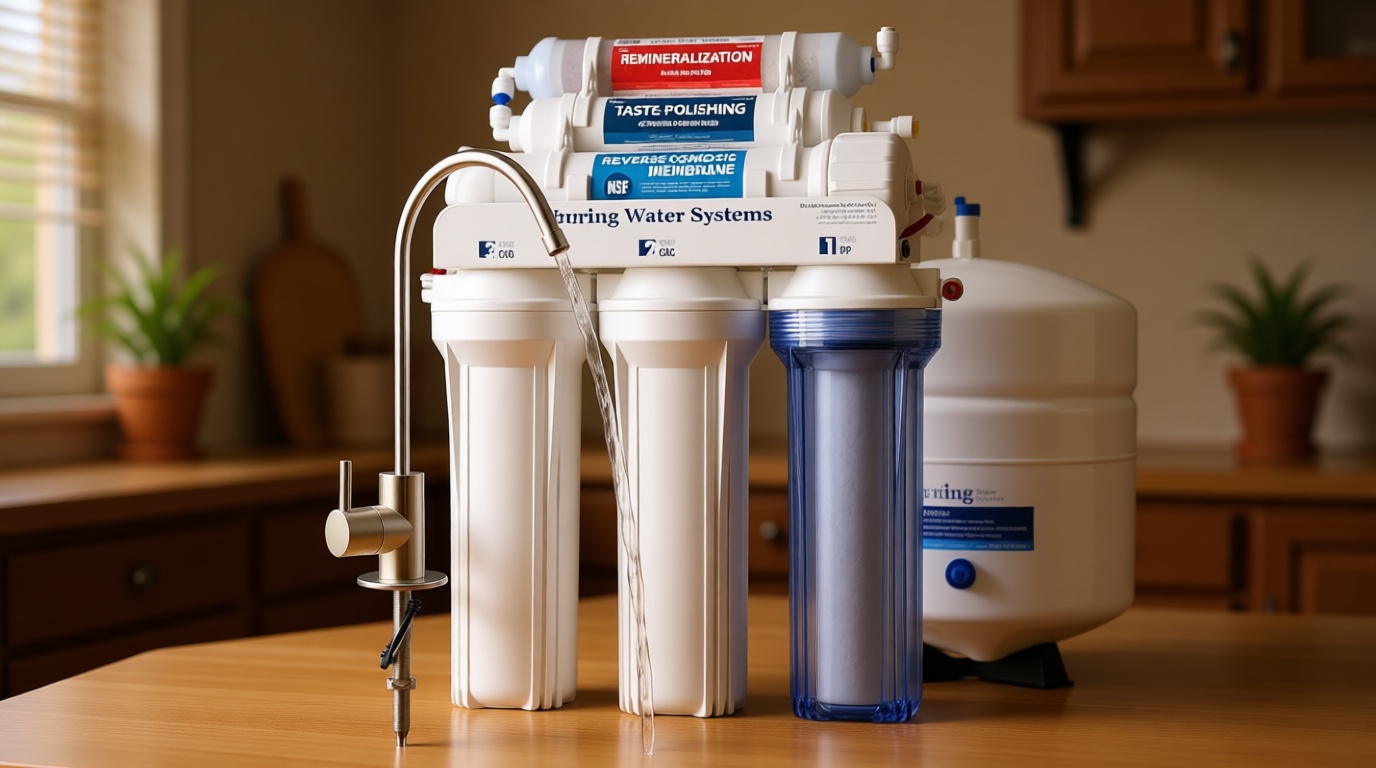
It’s a Water Hog, Plain and Simple
Here’s the dirty little secret: for every gallon of pure water you get, the system sends 2 to 4 gallons down the drain. Yep, you read that right. It’s like inviting a thirsty elephant to a small pool party—lots of splashing, but only a little for you.
This “reject water” isn’t wasted, technically—it’s used to flush the membrane clean. But if you’re eco-conscious or on a tight water budget, this might make you flinch. Some newer systems are much more efficient, so do your homework.
 How Do Water Filters Work? Types & Benefits Explained
Installation and Maintenance: Not a Set-It-and-Forget-It Gig
Setting up an RO system often requires drilling a hole in your counter or sink for a dedicated faucet. It’s not rocket science, but it’s also not a plug-and-play filter pitcher. You might need a plumber pal or a YouTube tutorial marathon.
You’ll also need to change filters every 6 to 12 months, and the membrane every 2 to 3 years. It’s like owning a pet that requires quarterly vet visits—manageable, but not free. The cost adds up over time, though it’s still cheaper than bottled water.

