
Difference Between Deionized Water And Distilled Water
So, you’re standing in the water aisle, staring at two bottles: one labeled deionized, the other distilled. And you’re thinking: “Wait, aren’t they the same thing?” I’ve been...
So, you’re standing in the water aisle, staring at two bottles: one labeled deionized, the other distilled. And you’re thinking: “Wait, aren’t they the same thing?” I’ve been there, my friend. It’s like looking at twins and trying to remember which one is the fun one. Spoiler: they’re both pretty bland, but for very different reasons.
Let’s start with the basics. Both of these waters are purified, meaning they’ve had all the nasty stuff removed. We’re talking about minerals, salts, and basically anything that makes water taste like, well, water. But here’s the kicker: how they get clean is where the party splits.
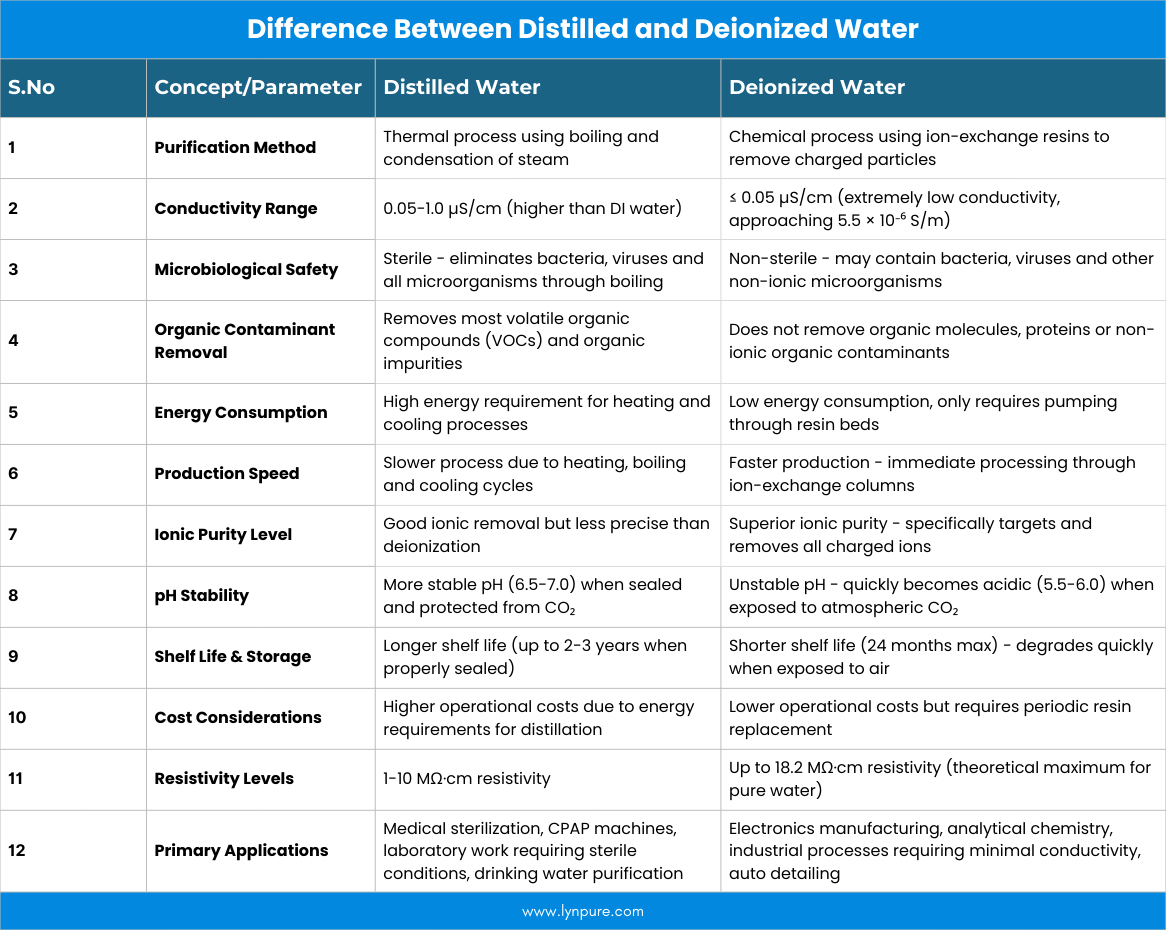
First up: distilled water. This is the old-school method. You boil the water until it turns into steam, then you catch that steam and cool it back down into liquid. Imagine a sweaty gym sock being wrung out into a glass—except it’s clean. The heat kills bacteria, and the steam leaves behind all the heavy metals and minerals. It’s like a spa day for your H2O.
Now, deionized water is the mad scientist of the two. Instead of boiling, it uses electrically charged resin beads to zap the impurities out. The beads grab positively charged ions (like calcium) and negatively charged ones (like chloride) and yank them out. Think of it as a bouncer at a club—only letting water molecules through, while the minerals get tossed out on their ear.
Here’s a practical difference. Distilled water is sterile, meaning it’s free of microorganisms. That’s why it’s used in CPAP machines, baby formula, and your car battery. You wouldn’t want a little microbe party in your radiator, right? Deionized water, on the other hand, isn’t necessarily sterile. It can still have bacteria—but it’s super pure in terms of dissolved minerals.
But wait—can you drink them? Yes, technically. But will you enjoy it? Hard no. Distilled water tastes flat and lifeless, like someone sucked the soul out of a cloud. Deionized water can taste even worse—almost metallic or bitter, because the ion-exchange process sometimes leaves a weird aftertaste. You’d rather drink tap water. And I say that as someone who lives in a city with pipes from 1952.
Here’s where it gets sneaky. A lot of bottled “purified water” is actually reverse osmosis, not distillation or deionization. But you’ll sometimes see labels that say “distilled” when it’s really a mix of methods. And deionized water is used mostly in labs and factories—places that need water that won’t mess up a chemical reaction. You don’t want your radioactive experiment to have a little bit of sodium messing things up, right?
 Distilled Water vs Deionized Water | Key Differences
So, which one should you actually care about? If you’re filling a steam iron or a fish tank, distilled is your pal. It won’t leave white crusty mineral deposits that look like a crime scene. If you’re washing lab glassware or topping off a car battery, deionized is the way to go. It leaves zero residue because it’s so pure it’s basically trying to become a vacuum.
But here’s the real kicker: both types of water are aggressively hungry. Without minerals, they act like a thirsty sponge. They’ll leach metals out of pipes, plastic, or even the air. That’s why you should never store them in a metal container—they’ll corrode it. Yes, water can be a bully.
Let’s talk cost for a second. Distilled water takes forever to make—you have to boil it, condense it, wait… it’s like watching paint dry while doing math. Deionized water is faster to produce, but the resin beads need to be replaced. So at the store, distilled is usually a bit cheaper. But neither will break the bank unless you’re, I don’t know, planning to water an entire rainforest.
One more thing: do not confuse these with “spring water” or “mineral water.” Those have intentionally added minerals for taste and health. Deionized and distilled water are the opposite—they’re the friend who takes out all the spices from the soup. Sure, it’s safe, but nobody’s excited about it.
So, next time you’re at the store, you can sound smart. Distilled = boiled. Deionized = zapped. Both are pure, but for different kinds of “pure.” And if anyone asks you for a glass of water, just hand them the tap. Trust me on this. Your taste buds will thank you, and you’ll save a dollar for actual coffee.

