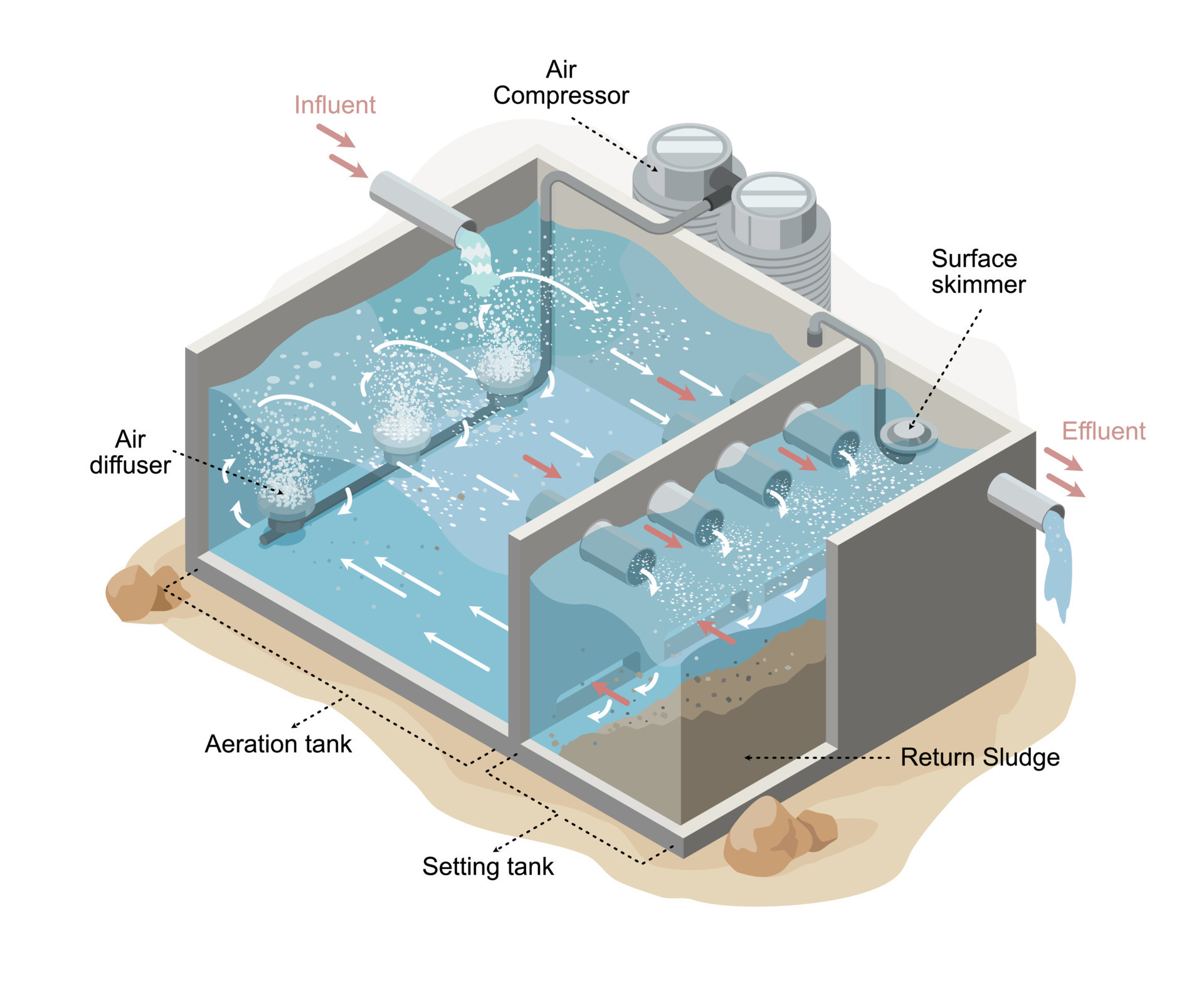
Think of the water leaving your toilet as a liquid salad bar for tiny bacteria. They chow down on the organic gunk, but they breathe air just like we do. If you starve them of oxygen, they start burping out hydrogen sulfide—that lovely rotten egg smell you get near a swamp.
That’s where aeration comes to the rescue. It’s the process of forcing air (or pure oxygen) into the wastewater so the “good” bacteria can party hard and break down the pollution. You want these little guys hyped up on oxygen, because a sleepy microbe is a messy microbe.
The Big Two: Diffused vs. Mechanical
Alright, enough biology. Let’s talk hardware. There are two main ways to get air into the water, and they’re as different as a yoga class and a rave. First up: diffused aeration. You’ve got these rubber discs (or tubes) at the bottom of the tank that blow out thousands of tiny bubbles, like a hot tub on steroids.
This method is super efficient because the small bubbles have more surface area. But here’s the kicker—those fine bubbles can clog up with gunk over time. Ever tried cleaning the filter on a fish tank? Yeah, scale that up by a thousand. The second option is mechanical aeration, which is basically a giant mixer or paddle wheel that splashes water into the air like a mad scientist’s fountain. It’s simpler, but it eats up a ton of electricity.

