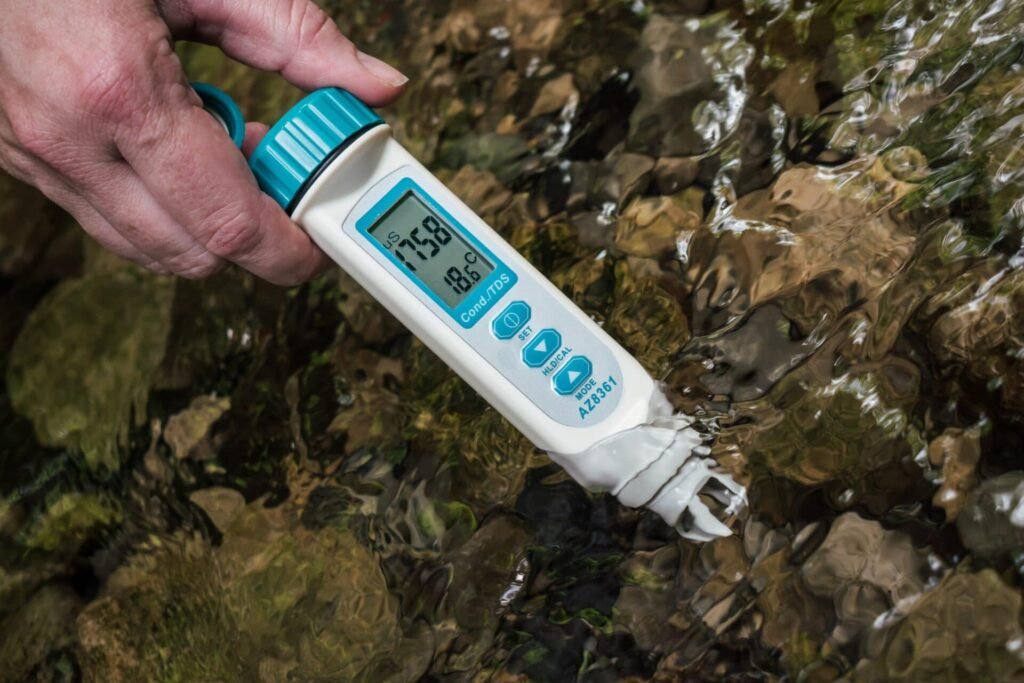
Using a TDS meter is embarrassingly simple. You literally just dunk the probe into a glass of water, press a button, and wait three seconds. The screen lights up with a number, and you’re suddenly a water detective. No PhD required—just a glass and some curiosity.
Most meters measure in parts per million (PPM). A reading of 0–50 means your water is practically a ghost town, which is great for espresso. A reading over 300? Your water is a mineral disco. Over 1000? Uh, you might want to call a plumber and a priest. Seriously, that water is chaotic.
The Little Jokes Along the Way
One time, I tested my friend’s aquarium water and got a reading of 800 PPM. I told him, “Your fish are basically living in a hard-rock concert.” He moved the fish. The meter didn’t care—it just beeped and went back to sleep. These devices have zero drama, and I respect that.
Another fun game? Test your bottled water against your tap water. You’ll probably find your fancy $5 imported water is no better than the hose outside. It’s the ultimate “gotcha” moment for your wallet. Instant regret, measured in seconds.
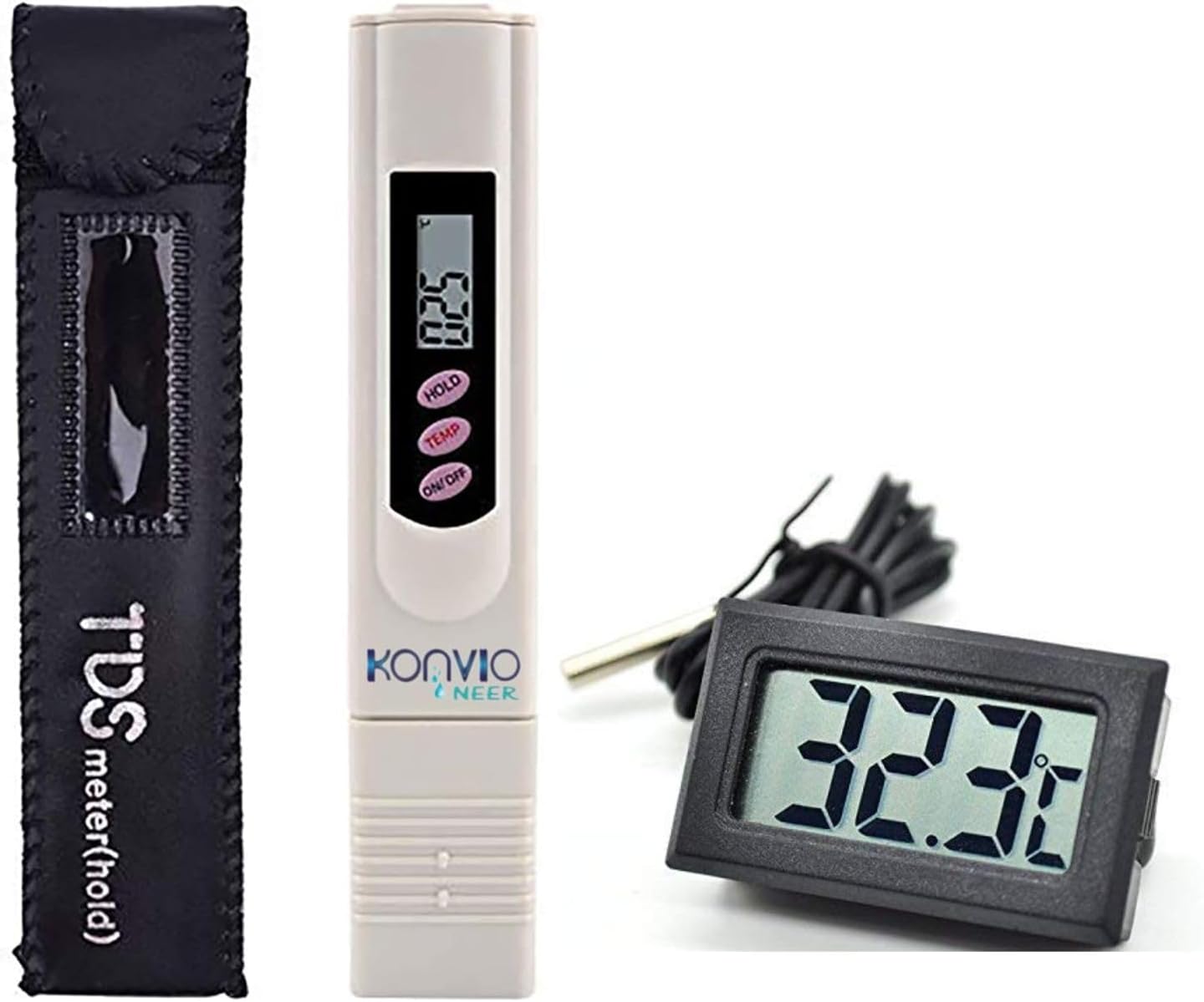 Konvio Neer Imported Tds Meter, Total Dissolved Solids Meter, Water

