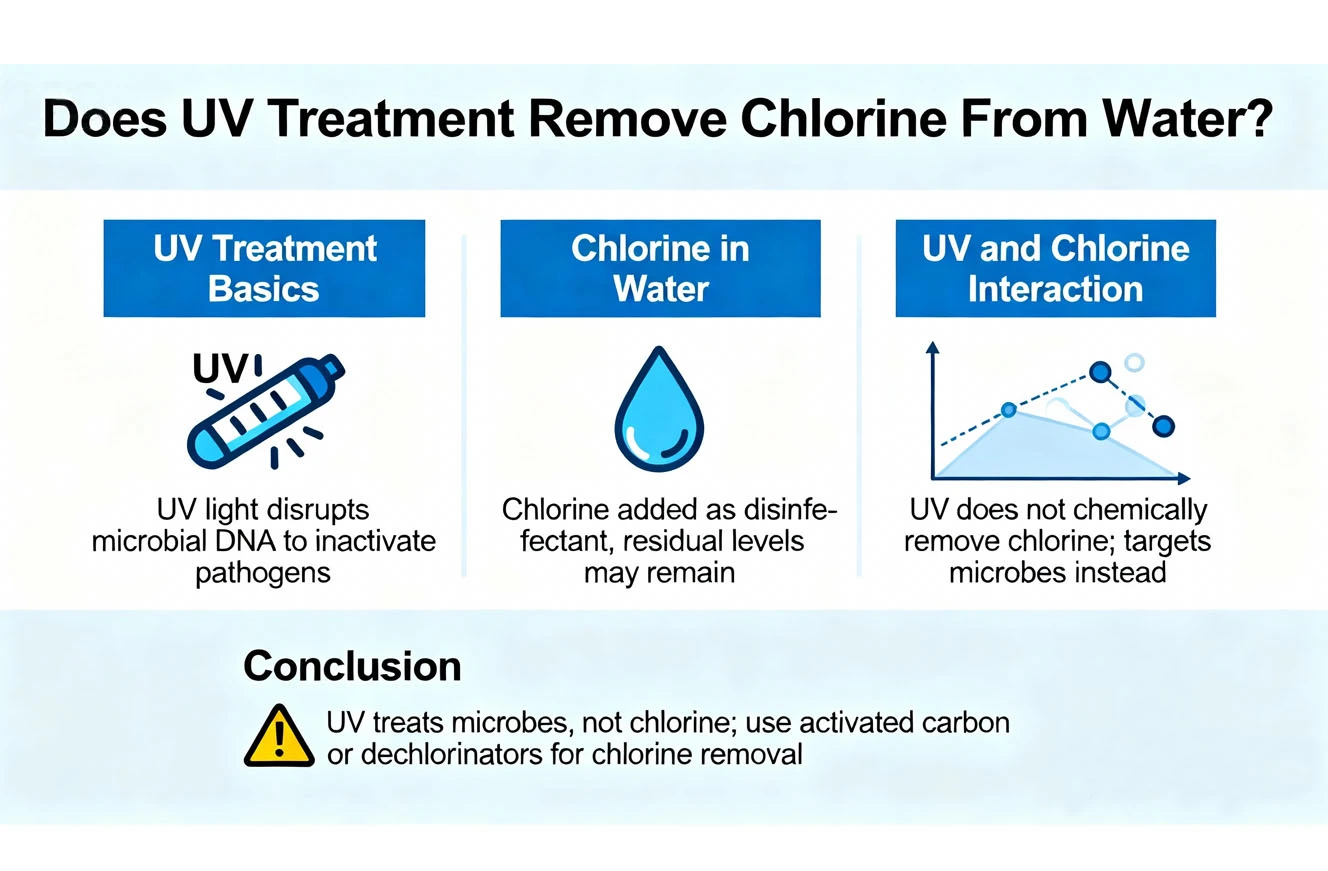
UV treatment works by frying the DNA of bacteria, viruses, and other creepy-crawlies in your water. It’s like giving those microscopic party crashers a sudden sunburn so severe they can’t party anymore. This is amazing for safety, but chlorine? That’s just a chemical compound—a molecule of chlorine atoms—not a living organism. UV light doesn’t care about molecules; it cares about life. So no, it won’t remove chlorine, and honestly, it shouldn’t have to.
Why Would You Even Want to Remove Chlorine?
Ah, here’s the kicker. Chlorine is added to municipal water to protect you from germs during its long journey to your glass. It’s a hero, but it can also make your water smell like a swimming pool or dry out your skin. You might want it gone for better-tasting coffee, softer showers, or happier houseplants. And UV alone can’t do that—but don’t worry, this is where you get to play water scientist!
To banish chlorine, you need a different tool, like an activated carbon filter. This stuff is like a sponge that soaks up chlorine, bad tastes, and odors. Pair it with your UV system, and you’ve got a dream team: the carbon zaps the chlorine, and the UV zaps the germs. It’s a one-two punch that makes your water delicious and safe. Talk about a win-win!

