Okay, this part is wild. Tiny traces of pesticides from farm runoff, and even leftover medicines people flush down toilets, can appear in tap water. Your filter’s carbon catches many of these organic chemicals. It’s not perfect—it won’t remove every single molecule. But it dramatically lowers the levels. Imagine your filter as a really picky librarian, sorting out dirty magazines from the good books. You still get the story; you just lose the trash.
What about bacteria and viruses? This is a common question. Regular fridge filters aren’t designed for that. They’re not a sterilization system. If you’re worried about microbes, you need a UV purifier or a filter rated for “cyst removal.” Your fridge is more about taste and chemical zapping. It’s the difference between a car’s air filter (stops dust) and a hospital mask (stops germs). Different jobs, both useful.
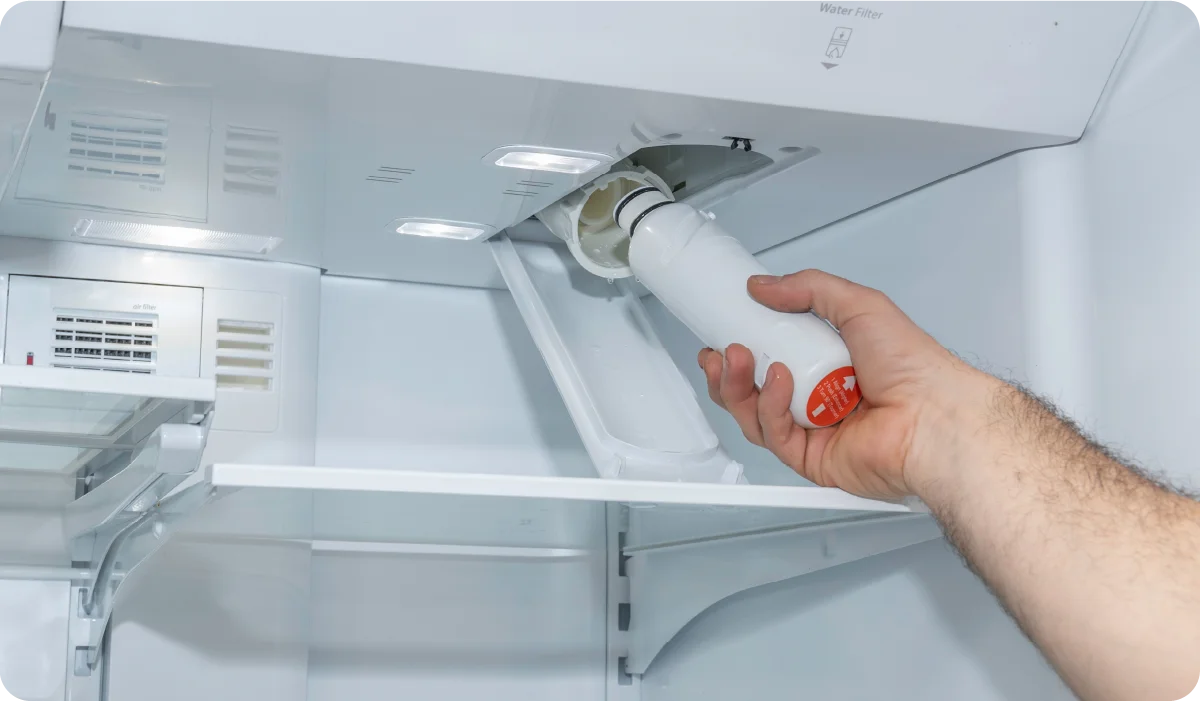 Step-by-Step Guide to Safely Remove Your Refrigerator Water Filter
Fluoride: The Controversial One
You might wonder about fluoride. That mineral added to many municipal water supplies to prevent cavities? Most standard fridge filters do not remove it. You’d need a special reverse-osmosis system to kick out fluoride. So if you like that extra cavity protection, your cheap fridge filter is actually leaving it in. See? Sometimes a filter’s “weakness” is actually a perk.
And let’s talk about taste again. Have you ever noticed that ice cubes from a filtered fridge don’t have that weird smell? That’s because filters remove compounds like hydrogen sulfide, which makes water smell like rotten eggs. It also takes out muddy, earthy flavors from algae in reservoirs. So your iced tea actually tastes like tea, not like a pond.