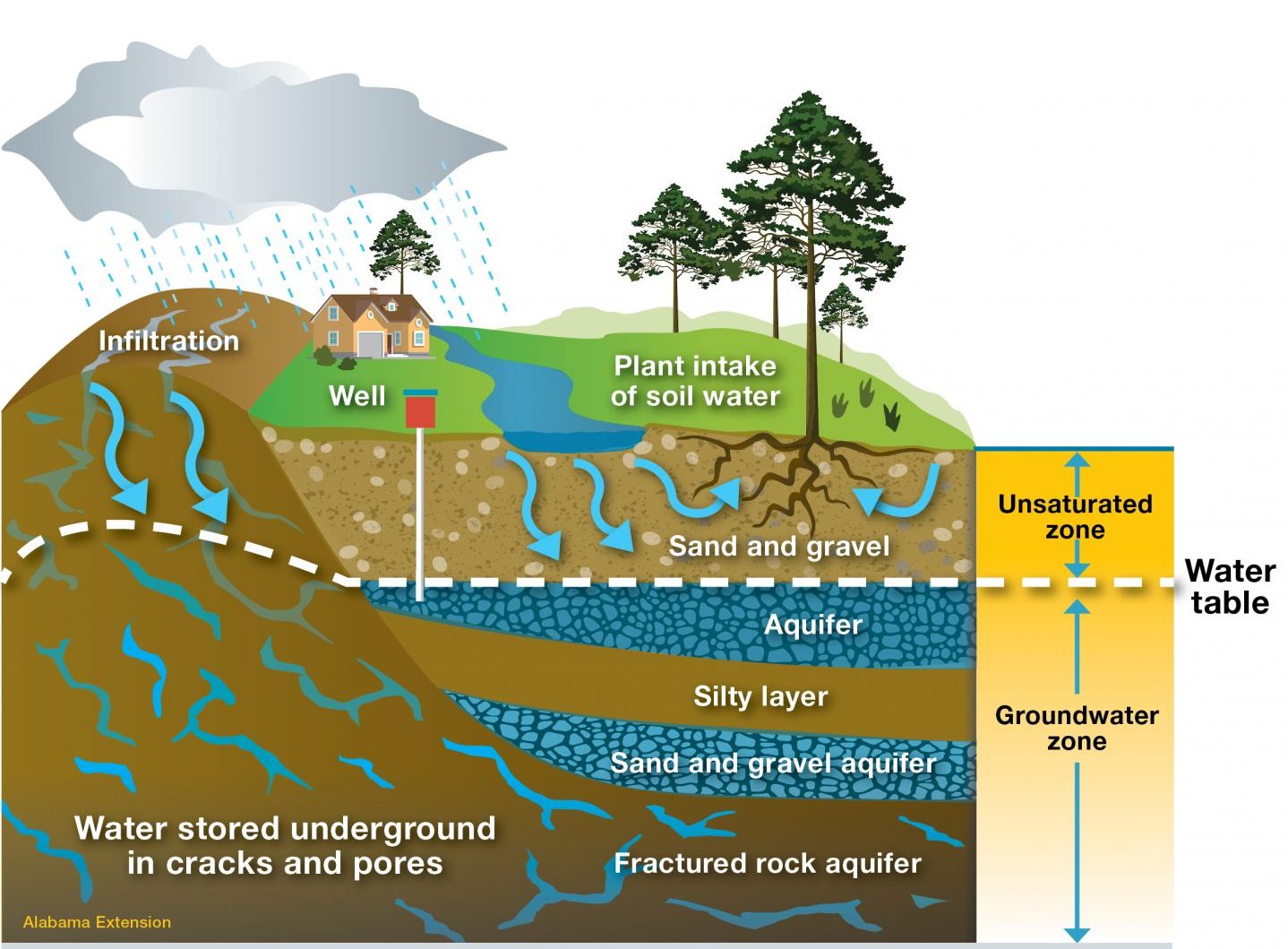
When it rains, some water runs off into storm drains or streams—that’s the impatient water. But the real star of the show is the water that soaks in. This process is called infiltration, and it’s basically the ground taking a long, slow sip.
Imagine your backyard after a good watering. The soil gets dark and damp, right? That’s the first layer getting a drink. But if you keep pouring, that water keeps moving downward, past the grass roots and deeper into the earth.
It’s not instant. Water travels through tiny spaces between soil particles, like squeezing through a crowd at a concert. Gravity is the bouncer, constantly pulling it further down.
The Great Underground Filter
Here’s the part that always makes me smile: the dirt is actually cleaning the water as it travels. As water trickles through sand, gravel, and clay, those layers act like a built-in Brita filter. They trap dirt, bacteria, and other yucky stuff.
By the time the water has traveled a few feet down, it’s surprisingly clean. That’s why well water often tastes so crisp and fresh—it’s been naturally polished by the journey.
Eventually, that water reaches a layer of rock or clay that’s so dense it can’t go any further. It starts to pool up, filling all the tiny cracks in the rock below. This is what we call an aquifer—nature’s own underground water tank.
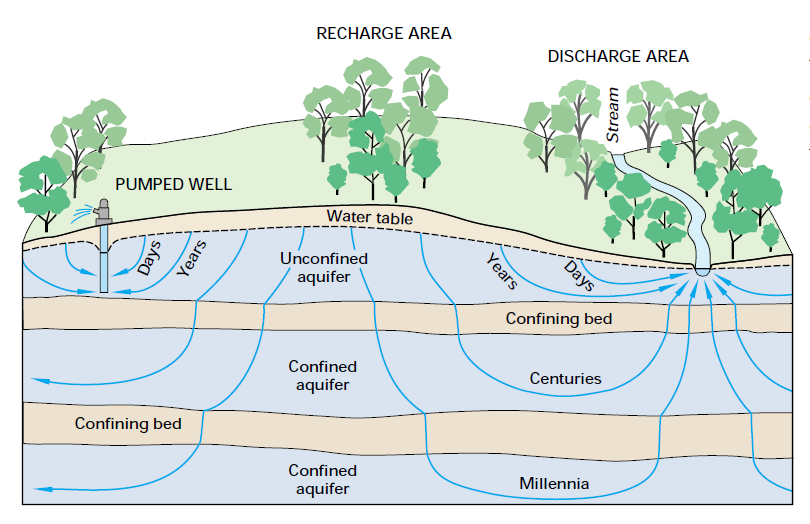 How do wells get their water from underground rivers? | Science