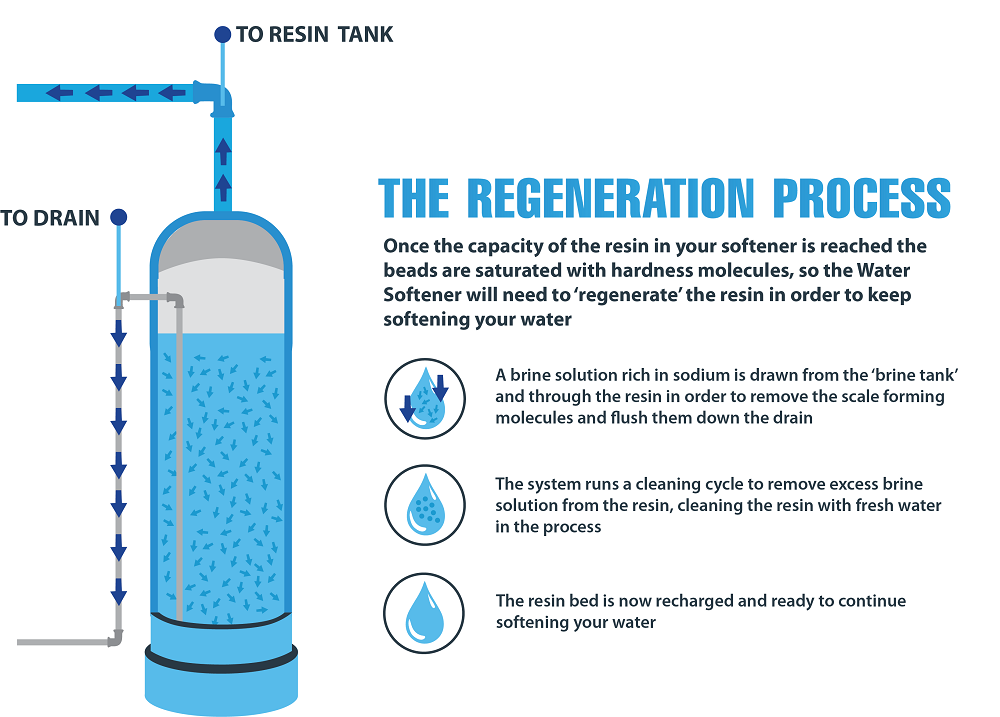
Think of your water softener like a hard-working sponge. Over time, it soaks up all the calcium and magnesium—that’s the hardness making your dishes spotty and your hair feel like straw. Eventually, that sponge gets full, and it stops working. Regeneration is the process where the softener flushes out all that gunk and gets a fresh start.
It’s like your machine taking a deep breath, running a marathon, and then hitting the reset button. Without it, you’d be stuck with hard water again, and nobody wants that sad coffee moment I had. The system literally cleans itself using a brine solution (salt water) to swap the hardness minerals for nice, soft sodium ions.
The magic dance of the brine tank
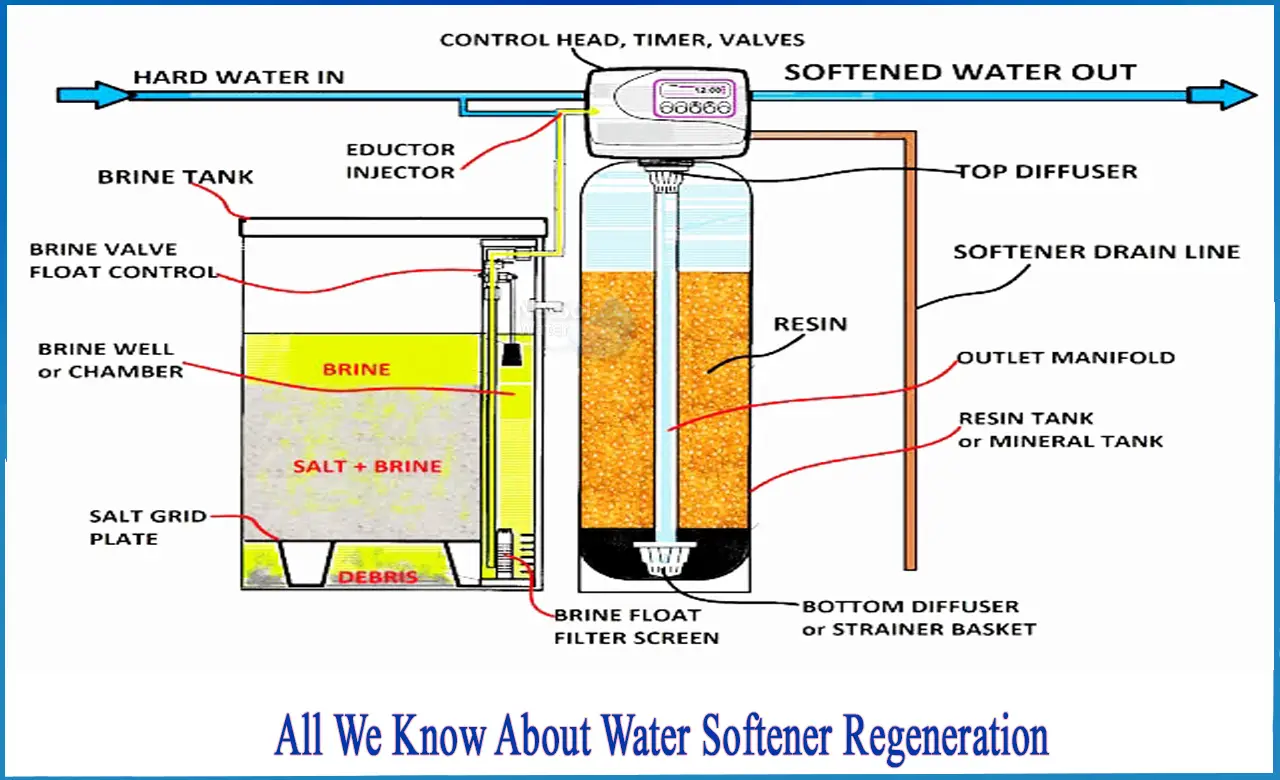
Here’s where it gets a little mechanical, but stay with me. Your softener has a resin tank (the sponge) and a brine tank (the salt shed). During regeneration, the softener sucks salty water from the brine tank and forces it through the resin. This chemical switcheroo knocks the calcium and magnesium off the resin beads and sends them down the drain.
Side note: This is why you see that sudden gush of water from your softener’s drain line—it’s the expelled hard-water criminals making their exit. After that, the system rinses the resin with fresh water, and bam, it’s ready to soften again. You don’t have to do a thing except make sure there’s salt in the tank. Seriously, that’s your only job.
 How Long Does It Take To Regenerate A Water Softener | Detroit Chinatown