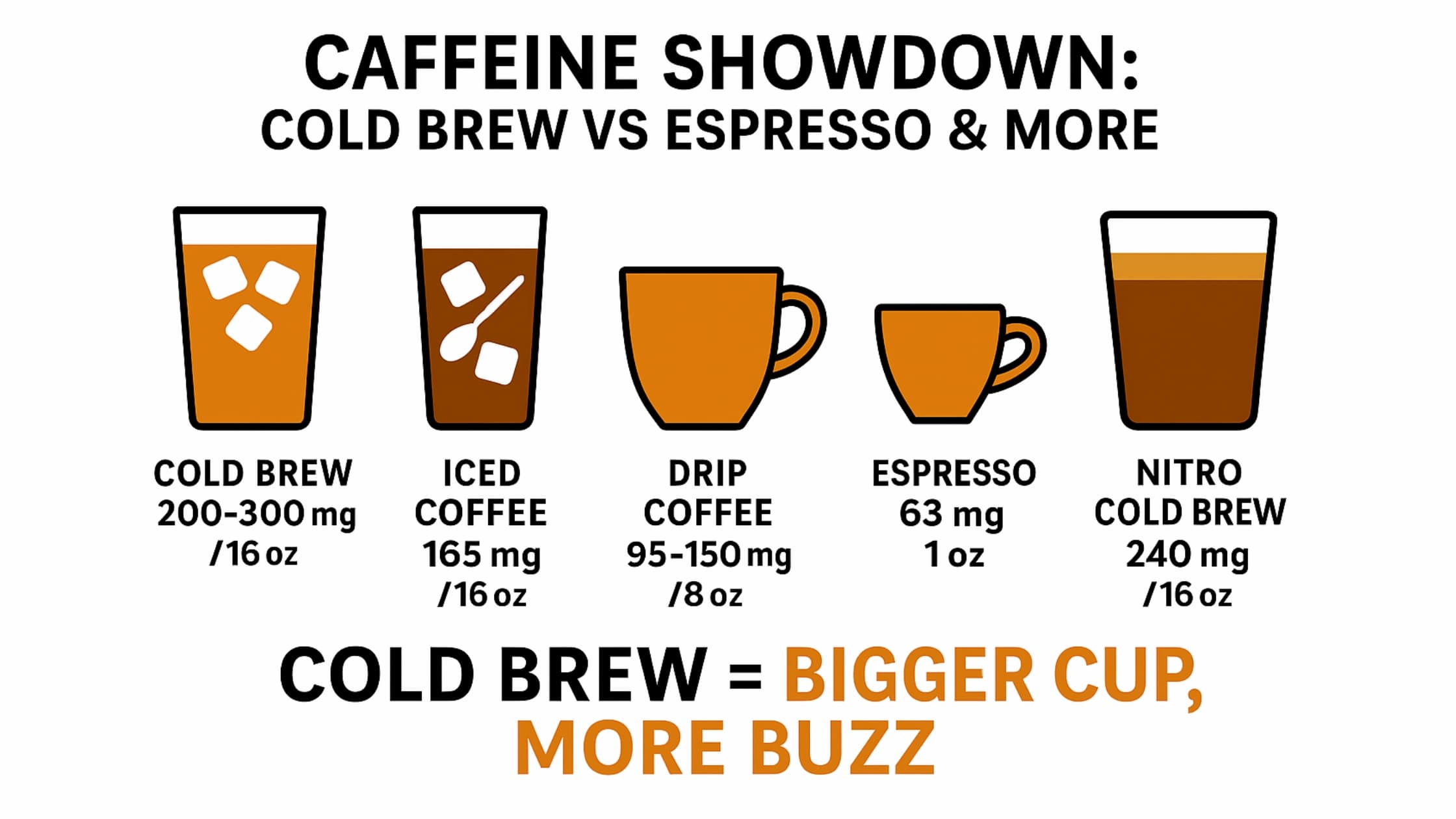
If you’ve heard one thing about cold brew, it’s that it’s basically rocket fuel. People talk about it like it’s the coffee equivalent of a double espresso doing a cannonball into a pool of Red Bull. But here’s the kicker: cold brew is stronger in caffeine per ounce than iced coffee, but not by the insane amount you’d think. Think of it like comparing a big pickup truck to a slightly smaller pickup truck—both will haul your day, just one has a louder engine.
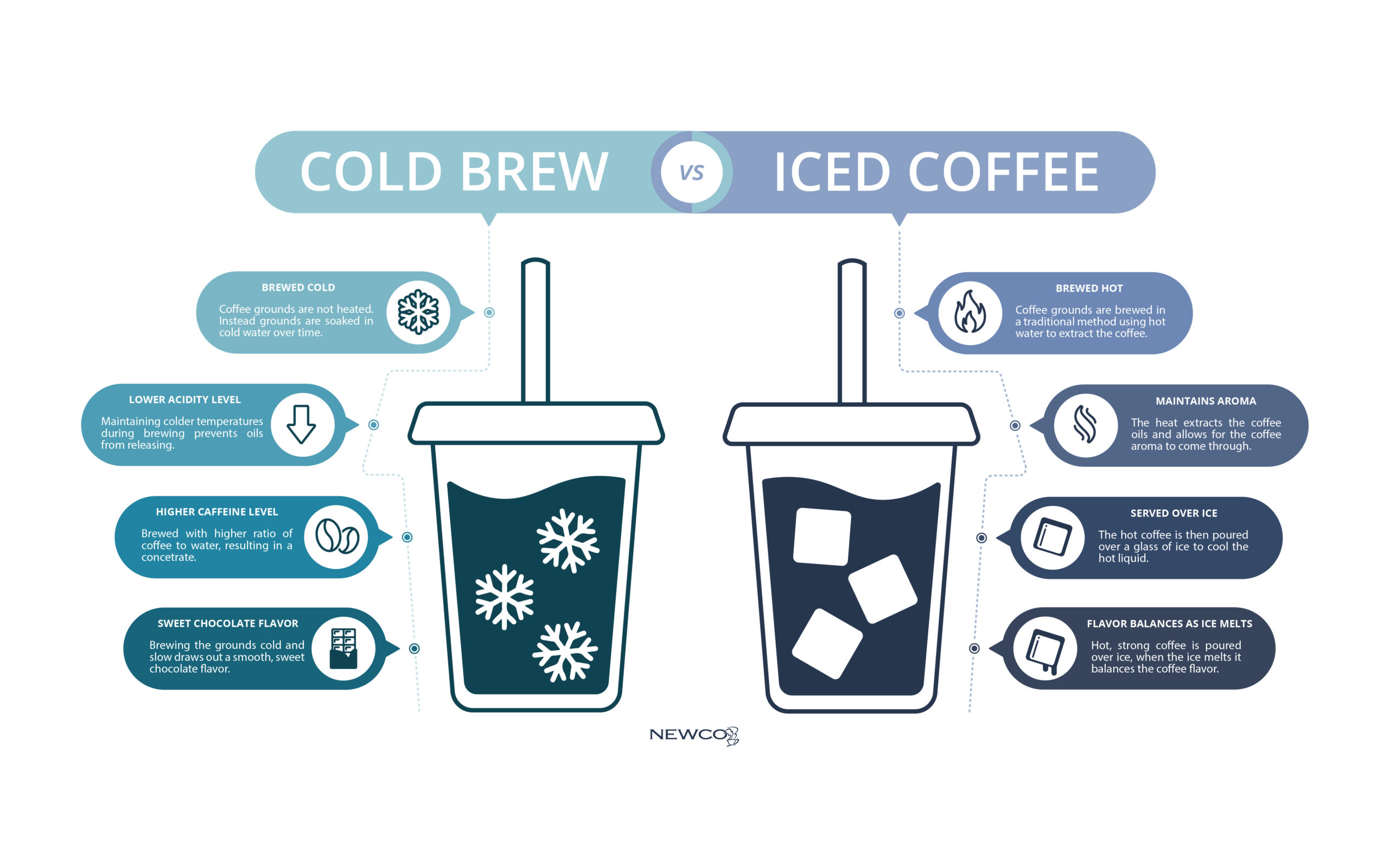
The reason cold brew wins is simple math. It’s made by steeping coffee grounds in cold water for 12 to 24 hours, which extracts more caffeine (and smoother flavor) than a quick hot brew. Iced coffee, on the other hand, is just hot coffee poured over ice. That hot brew loses some caffeine because water is only in contact with the grounds for a few minutes. So if you’re looking for a caffeine punch, cold brew is your heavyweight champ.
But Wait—There’s a Catch (Isn’t There Always?)
Here’s where your barista’s sneaky pour comes into play. Most coffee shops serve cold brew as a concentrate, meaning they mix it with water or milk. So that cup you’re sipping might actually have less caffeine than a tall iced coffee if they’re generous with the dilution. It’s like ordering a double bacon cheeseburger and getting a lettuce wrap instead—still good, but not the same beast.
Meanwhile, iced coffee is often made with the same coffee-to-water ratio as hot coffee. You’re getting a standard dose, maybe even a tiny bit less because the ice melts and waters it down. But if the shop uses a stronger roast (like a dark roast), you’re getting a different chemical dance. Dark roasts actually have slightly less caffeine than light roasts due to the roasting process, but that’s a whole other rabbit hole. Let’s keep our feet on the ground here.
 Cold Brew Coffee Vs Iced Coffee Caffeine | Detroit Chinatown

